


Lovella: Novels & Audiobooks
FMPROJECT LIMITED
I came away from Lovella: Novels & Audiobooks thinking of it as a focused companion for romance readers who want their stories to follow them through the day. It is not trying to be a general digital library or a broad reference tool. Its identity is much narrower: a Books & Reference app built around romantic novels, love stories, and listening rather than only reading. That clear focus is its biggest strength, but it also explains why the experience will feel more useful to some readers than to others.
In my experience, the app works best when I treat it as a convenient source of mood-driven entertainment. I can choose something romantic when I have a quiet moment, then return to it later when reading is difficult but listening is practical. That makes it a natural fit for commutes, household chores, evening walks, or winding down before sleep. The important distinction is that Lovella is about access to a particular kind of fiction, not about replacing every reading app on a phone.
What makes Lovella appealing to romance readers
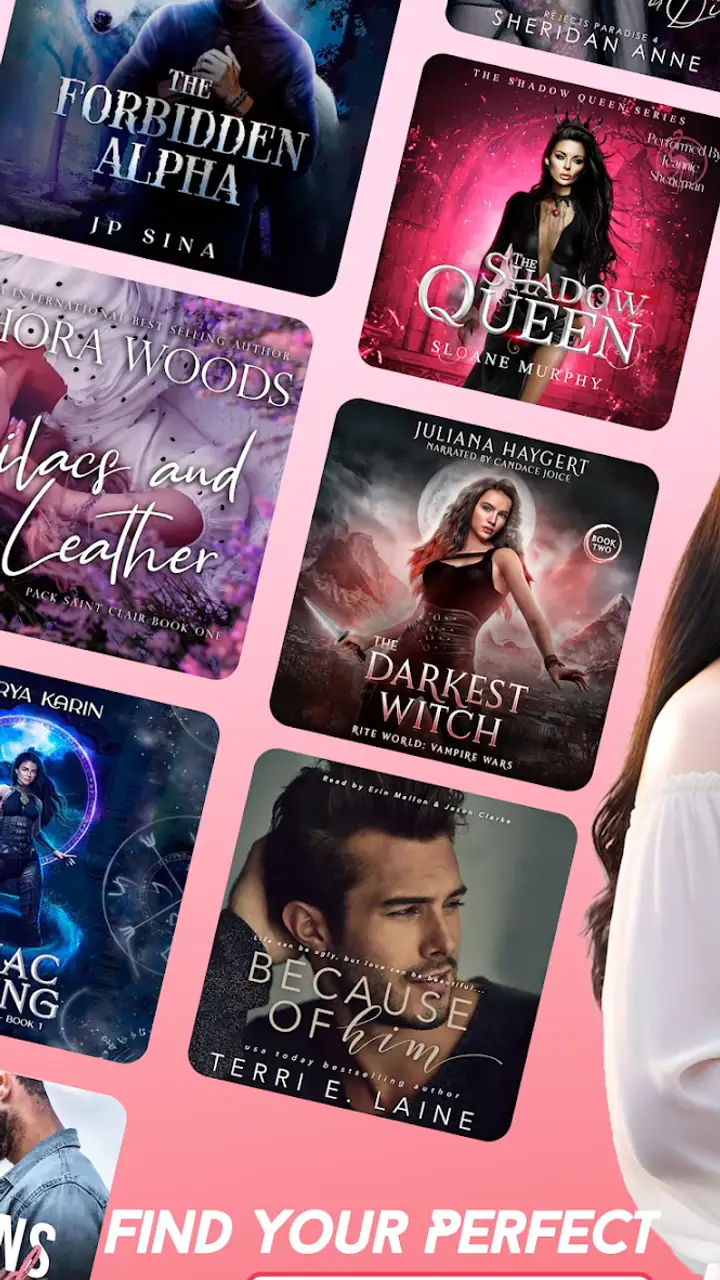
The first thing I noticed is how directly the app presents its purpose. The experience is centered on romantic audiobooks and love stories, so I do not have to work through an enormous mix of unrelated genres before reaching the kind of fiction I actually want. For someone who already knows that romance is their preferred escape, this specialization saves time and reduces the friction that often comes with browsing a large, general-purpose service.
That focus also changes how I choose a story. Instead of opening an app with a vague idea that I want to read something, I can come in with a more specific feeling: something gentle, dramatic, emotionally intense, or simply easy to follow while doing something else. A dedicated romance catalog encourages that kind of decision-making. I am not just searching for a title; I am choosing the type of emotional experience I want at that moment.
The audio emphasis is especially valuable. Reading on a phone can be tiring, particularly after a full day of work or study. Listening lets a novel occupy a different part of my routine. I can keep the story moving while preparing dinner or organizing a room, situations in which an ebook would have to remain untouched. That does not make audio automatically better than text, but it gives Lovella a practical role that a conventional reading app cannot fully provide.
Related News

Why WhatsApp Messenger Still Makes Everyday Communication Feel Easy

Jurassic World: The Game Is the Better Dino Tycoon for Strategic Players

Threads in Real Life: Who Should Join, Lurk, or Leave

How SHEIN Turned Shopping Into an Endless Content Feed

How to Make Fortnite Feel Smarter on Mobile

Should You Switch to Microsoft Outlook on Mobile?
A useful way to approach the app is to build a small rotation rather than consume every story in the same way. I might reserve one title for focused listening with headphones, another for short sessions, and a third for moments when I want something familiar. This prevents the common problem of abandoning an audiobook simply because the first session happened at the wrong time or in the wrong mood. The app’s value comes from fitting romance into real routines, not from turning every spare minute into a serious reading session.
There is also a psychological advantage to a specialized catalog. When I open a broad books platform, I can spend longer comparing genres, formats, editions, and unrelated recommendations. Lovella’s narrower identity makes the starting point simpler. If romance is already what I want, the app feels more intentional than a general-purpose storefront. That is a small design benefit, but it matters when I am using my phone for a quick break rather than planning a long reading project.
Listening changes the way I use a romance novel
Audiobooks are not merely ebooks with a play button. The narrator’s delivery can influence how I understand a character, a confession, or a tense exchange. With romantic fiction, timing and tone often matter as much as the words themselves. I found that listening can make emotional scenes feel more immediate, while reading gives me more control over pacing and lets me pause on a sentence. Lovella is therefore most convincing for readers who appreciate performance and atmosphere, not only those looking for the fastest way through a story.
Gallery
My practical advice is to test the app in several listening situations before deciding whether it belongs in your daily routine. A title that feels absorbing through headphones may be less suitable in a noisy environment. Likewise, a story that works during a walk may demand too much concentration for multitasking. I would not judge the whole service after one distracted session. Audio fiction needs the right setting, and the app’s strengths become clearer when I give it one.
Another useful habit is to keep active listening separate from background listening. If a chapter contains a complicated relationship shift or several similar characters, I prefer to stop what I am doing and pay attention. For lighter passages, background listening is perfectly comfortable. This distinction helps avoid losing important details and then blaming the app for a problem caused by divided attention.
Who is behind it and what the current release means
Lovella is developed by FMPROJECT LIMITED. It was released on January 14, 2025, and the current version is 1.15.3.1. The app requires Android 8.0 or later, which makes it accessible to people using many older Android phones while still keeping the installation requirement clear. I would check the operating system on an older device before planning to use it there, but the minimum is not unusually demanding.
The app has reached over 100 thousand installs and holds a 4.4 average from around 3.8 thousand ratings, alongside 490 written reviews. Those figures suggest that it has attracted a meaningful audience rather than remaining an obscure experiment. I still would not treat a store score as a substitute for personal testing, especially with entertainment apps, because satisfaction depends heavily on preferred romance styles and listening habits. Even so, the response indicates that the focused concept is resonating with a substantial group of users.
It is marked for a Teen audience. That is worth keeping in mind if the phone is shared with younger family members or if I am choosing an app for a household device. The label gives a useful boundary, but it does not tell me exactly how every story will feel. Anyone who has a strict preference about emotional intensity or subject matter should still make individual choices carefully rather than assuming every title has the same tone.
The strongest everyday use case
My favorite scenario for an app like this is a routine that has small gaps but no convenient time for reading. Imagine finishing work, taking public transport home, preparing food, and then trying to relax without staring at another screen. A romance audiobook can connect those moments. I can listen during the journey, pause when I arrive, and continue later without needing a desk, a lamp, or both hands free.
The same pattern works for someone who enjoys stories while walking. The phone stays in a pocket, and the novel becomes part of the route rather than another visual task. I would keep the volume at a level that allows awareness of the surroundings and avoid using it in situations where attention is needed for traffic or other hazards. The point is convenience, not turning every activity into an excuse to ignore the environment.
For bedtime, the app can be appealing because listening is less visually stimulating than reading from a bright screen. However, I would be selective about the story and the session length. A tense romantic plot can be more energizing than calming, and it is easy to keep listening longer than intended when a chapter ends at an emotional moment. Lovella can support a relaxing routine, but the result depends on choosing a suitable title and setting a personal stopping point.
The trade-off between specialization and variety
The same narrow focus that makes the app convenient can become limiting. If I want mysteries, history, science, biographies, or practical reference material in the same place, a general audiobook service or a wider ebook platform will probably serve me better. Lovella makes sense when romance is central, not when it is only one occasional interest among many.
There is a second trade-off in choosing audio over text. Listening is flexible, but it is less private in some situations and less precise when I want to skim, search, or revisit a particular passage. I can read a page quickly, compare names, or jump backward visually in a way that audio does not always match. For studying, quoting, or closely analyzing writing, I would choose a text-first alternative. For emotional immersion during ordinary tasks, the audio format has the advantage.
That difference also affects how I handle interruptions. A short break in concentration can make me miss an important line, especially if several characters are speaking. I found it helpful to rewind as soon as I realized my attention had drifted instead of continuing and hoping the context would become obvious. This is a small but important workflow tip: audio rewards active correction, while text makes backtracking more visible.
Cost, access, and the decision to keep using it
Lovella is free to install, which makes trying the experience straightforward. The app also includes in-app purchases ranging from $0.99 to $519.99 per item. That wide range means I would pay close attention to the purchase screen before confirming anything and decide in advance how much I am comfortable spending. Free entry is useful, but it should not be confused with unlimited access to every possible part of the service.
For me, the sensible approach is to use the free experience first and evaluate whether the catalog, listening style, and overall routine genuinely fit. I would not make a purchase simply because a story ends at a tempting moment or because I feel committed after spending time in the app. A romance platform should earn a place in my budget through repeated use, not through impulse.
This is also where Lovella differs from borrowing an audiobook through a library service or buying individual books from a conventional store. Library access can be excellent for readers who want variety without adding another recurring entertainment expense, although availability and borrowing rules vary by library. A standard bookstore app may offer stronger ownership and text options. Lovella’s appeal is the focused experience and the possibility of discovering romance listening in one dedicated environment, but the best value depends on how often I use that focus.
Where the experience may create friction
The biggest potential weakness is not the idea itself but the narrowness of the choice. A romance fan may still want different subgenres, lengths, tones, and narrative styles. If the available selection does not match my current mood, the app can feel less useful than its concept suggests. A dedicated catalog is efficient when it has the right story; it is less satisfying when I am looking for something very specific and cannot find it quickly.
I also think the app asks users to be comfortable with a discovery process rather than expecting every title to be an immediate match. Romance is personal. One reader may enjoy slow emotional development, while another wants fast conflict and dramatic turns. I would give a new title a fair sample, but I would not force myself through a story merely because it fits the broad category. The app can narrow the genre without guaranteeing that every selection will suit my taste.
The purchase range is another reason to stay attentive. Seeing a free app alongside optional items can make the boundary between casual use and paid use easy to overlook. I recommend reading each confirmation screen carefully and treating purchases as separate decisions. This is not a criticism of romance audio itself; it is a reminder that convenience can encourage quick taps, particularly when I am already emotionally invested in a story.
People who need advanced text controls, detailed study tools, or a broad nonfiction collection should probably choose another service. Lovella is not the right answer for a student building a reference library, a reader who wants to switch constantly between unrelated genres, or someone who prefers owning conventional ebooks. It is also a weaker fit for anyone who dislikes narrated fiction and wants complete control over their own reading pace.
Who should download it
I would recommend Lovella first to romance readers who want audio to become part of an everyday routine. It suits someone who already knows that love stories are their comfort genre and who values being able to listen away from a reading screen. It is particularly attractive to people with commutes, repetitive household tasks, regular walks, or evenings when holding a book feels like too much effort.
It can also work for a reader who is new to audiobooks but does not want to begin with a huge, intimidating platform. The focused subject makes experimentation less complicated. I would start with short listening sessions, use headphones in a quiet place, and notice whether the narration helps me connect with the story. If it does, the app has a clear role. If I keep wishing for text, broader categories, or more control over passages, that is a sign to move to a different format.
I would skip it if romance is only a minor interest or if I expect one app to cover every kind of book. I would also be cautious about recommending it to someone with a strict spending limit until they understand how the optional purchases fit into their use. The free installation lowers the barrier to trying it, but a careful user should still make deliberate choices about paid content.
One final tip is to match the app to a repeatable habit instead of opening it only when boredom appears. For example, I might reserve it for a particular walk or for the first part of an evening routine. That makes it easier to judge whether Lovella is genuinely adding value. After several sessions, I can tell whether I am returning because the listening experience fits my life or merely because the app is convenient to open.
My final verdict
Lovella succeeds because it knows exactly what it wants to be: a romance-centered Books & Reference app that brings novels and love stories into an audio-friendly routine. Its focused identity is more useful than a generic promise to contain every kind of book. I found the strongest case for it in ordinary moments when reading is inconvenient but I still want a continuing story.
It is not a universal replacement for an ebook reader, a library app, or a broad audiobook platform. The specialized subject, audio-first approach, and optional purchases mean that the right audience matters. Readers who want romance on the move should find a lot to like, while people seeking wide genre coverage, close text analysis, or predictable ownership may be happier elsewhere.
Overall, I see it as a worthwhile free starting point for adult and teen romance listeners who want to test a dedicated audio experience on a compatible Android phone. The best way to use it is patiently: explore the available stories, choose listening moments that suit the format, keep an eye on purchases, and judge the app by how naturally it fits your routine. My recommendation is positive, but specific: choose Lovella for focused romantic listening, not as an all-purpose reading library.
FAQs for Lovella: Novels & Audiobooks
What is Lovella: Novels & Audiobooks?
Lovella: Novels & Audiobooks is an entertainment app focused on serialized fiction and spoken storytelling. It gives readers access to romance, drama, mystery, and other novel-style content, while selected titles can also be enjoyed as audiobooks. Stories are generally divided into episodes or chapters, making the app suitable for short reading sessions or longer listening breaks.
Is Lovella: Novels & Audiobooks free to use?
The app may allow users to download it and explore some stories without an upfront purchase, but access to complete novels, premium chapters, or certain audiobook content can depend on coins, subscriptions, advertisements, or in-app purchases. Before starting a title, check its unlock requirements and review the current pricing shown in the app, since availability and offers may change.
Does Lovella work offline for reading or listening?
Offline access depends on the specific title and the features enabled in your version of Lovella. Some content may need to be streamed or loaded through an internet connection, while other chapters or audio files may offer downloading for later use. If offline listening is important, verify the download option before traveling or using mobile data restrictions.
What kind of stories and audiobooks are available on Lovella?
Lovella is primarily designed for users who enjoy episodic fiction, especially relationship-focused stories, emotional drama, suspense, and other popular novel categories. The catalog can vary by region, language, and licensing agreements. Because stories are often released chapter by chapter, users should expect ongoing series as well as titles that may already be complete.
Does Lovella require an account, and are there privacy concerns?
Some features may be available without registration, but creating an account can be necessary for synchronizing progress, saving favorites, accessing purchases, or continuing a story across devices. As with any reading or audiobook platform, review the permissions and privacy policy before signing up. Avoid sharing unnecessary personal information and check subscription terms carefully before confirming payment.
Pros
- Wide selection of romance novels and serialized stories
- Audiobook support makes stories convenient to enjoy on the go
- Personalized recommendations help discover new authors
- Offline reading or listening may be available for selected titles
- Regularly updated catalog keeps new content coming
Cons
- Many popular titles may require a subscription or in-app purchases
- Story quality can vary between authors and individual series
- Some chapters may be locked behind waiting periods or credits
- Audiobook availability may differ from the ebook catalog
- The app may require an account to save progress and sync devices


